Selected Experience & Results.
These case studies bring Lead • Bridge • Translate to life. Bryan leads complex programs and operations from idea through implementation, bridges the people, organizations, and disciplines needed to move the work forward, and translates technical knowledge, research, and innovation into practical action.
Across manufacturing, education, applied research, and agricultural workforce systems, the common thread is turning complexity into execution by building the people, processes, partnerships, and operating structures needed to produce meaningful results.
Translate
#3 - From Applied Research to Workforce Systems
Research Oenovation Collective → Vintners Institute → Destination Agriculture
Innovation ecosystems, technology adoption and workforce strategy
The Situation
Throughout my career, I have worked across nearly every stage between university-level research and day-to-day industry practice: applied research, technology transfer, commercialization, technical sales, operational adoption, and career-technical education.
That experience taught me that innovation is not a single event. It is an ecosystem. Research has to be tested. New technologies have to prove their value. Producers have to trust the results. Practices have to become part of normal operations. And people have to be trained to use them.
When Dr. Peter Salamone invited me to join the Research Oenovation Collective (ROC), I saw an opportunity to bring the type of collaborative research available to large corporate wineries to smaller estate producers that grow, make, and sell their own products.
Building a Collaborative Research Model
ROC brought wineries together to design and conduct applied trials around problems of mutual interest.
In 2019, the collective conducted six trials, generally with three to five wineries participating in each. Having the same technology or practice evaluated at more than one winery gave participants a valuable point of comparison, while every member could also learn from the other trials conducted by the collective.
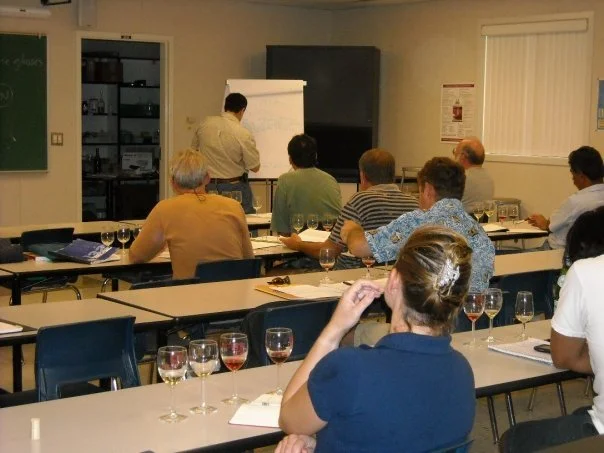
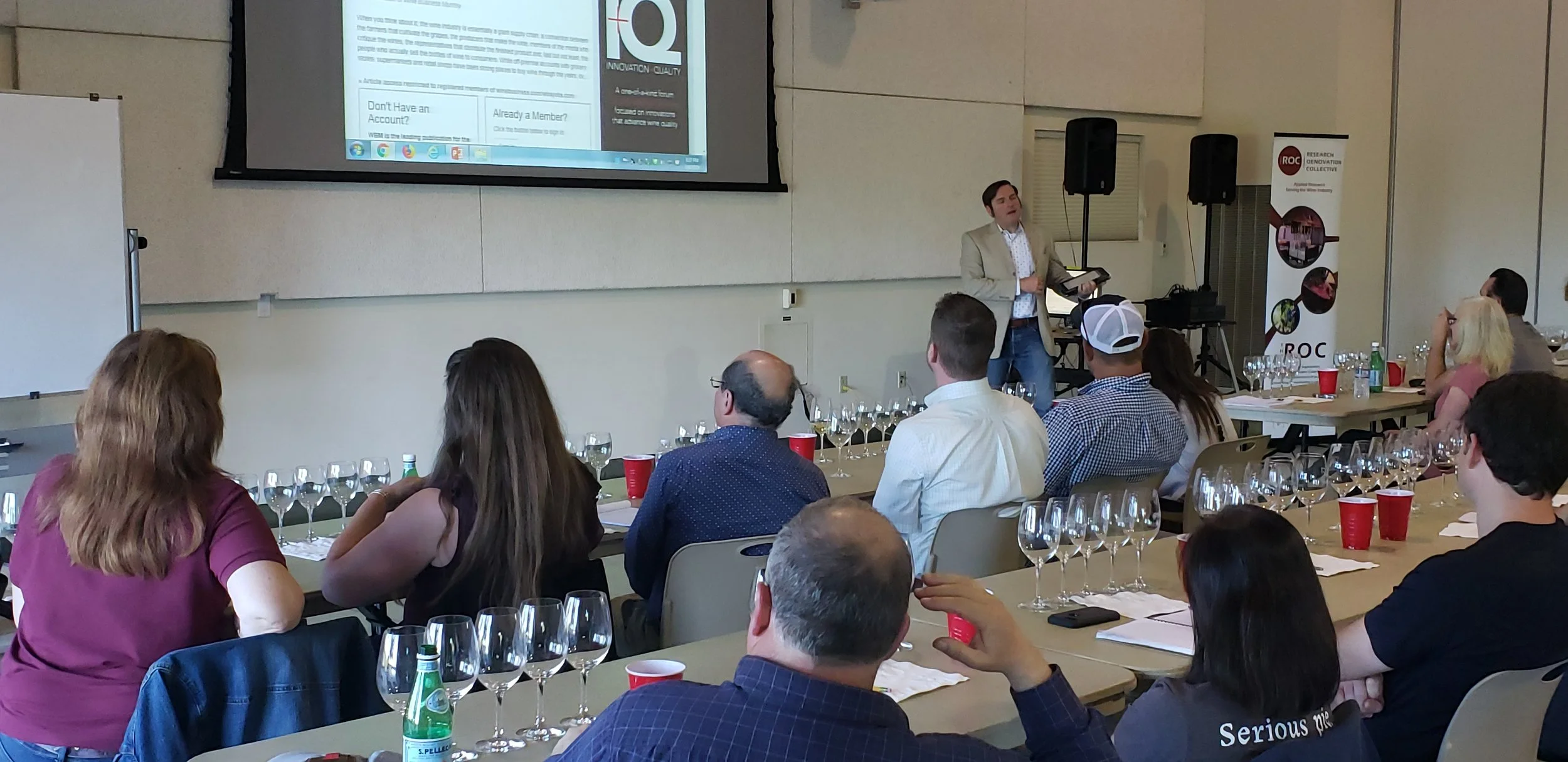
The research tastings became more than technical evaluations. They created forums where experienced winemakers and technical professionals could compare results, challenge assumptions, discuss implementation, and learn from one another.
The network effectively amplified the value of each individual winery's research.
Disruption and Redesign
COVID-19, followed by major California wildfires, disrupted the wine industry and ultimately shut down ROC's original operating model.
When former ROC members expressed interest in restarting the work, I co-founded Vintners Institute with a distance-education specialist. Rather than simply recreating the old organization, we redesigned the model around what the disruption had exposed.
Rural winegrowing communities are geographically dispersed, and a professional-development system dependent entirely on in-person gatherings is vulnerable. I therefore incorporated online education using the Canvas learning-management system and began developing technical instruction aligned with state and federal Registered Apprenticeship standards.
The longer-term goal was to make high-quality technical wine education accessible even in remote agricultural communities while connecting workplace learning with a broader understanding of how agricultural products are grown, made, and sold.
Vintners Institute ultimately rebuilt the collaborative from eight participating wineries to a network of approximately 20 while expanding applied research, technical forums, commercialization support, and shared learning.
Translating Innovation for Industry
Wine Business Monthly had been involved with ROC from its early stages. Following the launch of Vintners Institute, I was invited to report on applied research and emerging technologies for the publication, including work associated with collaborative trials.
That role widened my view of the innovation ecosystem.
I interviewed researchers, technology developers, growers, winemakers, manufacturers, and technical specialists and translated their work for industry audiences. Over time, I authored more than 50 technical articles covering applied research, manufacturing innovation, sustainability, agroecology, and emerging technologies.
Through that work, I also began seeing increased interest in regenerative and organic agricultural systems and thinking more deeply about what these changes would mean for the next generation of agricultural workers.
From Industry Learning to Workforce Strategy
My experience as a career-technical educator reinforced the concern. Young people entering agriculture were facing repeated economic, environmental, and technological disruptions before many had even established their careers.
I had also been involved with the Workforce Alliance of the North Bay since 2016, first as a committee member and later serving on its Board of Directors from 2019 through 2025. That experience gave me a close view of the regional workforce system—and of the relatively limited workforce infrastructure specifically designed around agriculture.
When an opportunity arose to support Registered Apprenticeship expansion across Napa, Marin, Mendocino, and Lake counties, I tested that observation with labor-market data.
Using Lightcast and Econovue, I developed an outreach universe of more than 700 prospective employers and narrowed it to approximately 200 high-priority businesses. Agriculture and agricultural manufacturing represented a substantial share of the opportunity.
That gave the work a clear direction.
Listening Before Designing
I began meeting with growers, producers, and other agricultural businesses to understand their workforce needs rather than beginning with a predetermined training program.
Those conversations reinforced something I had seen throughout my career: specialty-agriculture businesses often need employees who understand more than one narrow task. Particularly in smaller enterprises, workers benefit from understanding how an agricultural product moves through the complete value chain:
Grow → Make → Sell
That thinking became the foundation for Destination Agriculture, a workforce framework connecting specialty agriculture, processing, education, regional identity, and career pathways.
It also led to development of the proposed Agroecology Operations Technician apprenticeship as a cross-trained entry point into agricultural careers.
Where the Work Is Now
Following completion of the North Bay grant partnership, the apprenticeship-development work returned to the South Bay Workforce Investment Board for continued advancement within its broader California jurisdiction.
The proposed occupation has since received support from regional and statewide industry organizations and NGOs and has been recommended for national review. Current work involves continued coordination among regional, state, and national stakeholders to demonstrate industry need and advance the apprenticeship-development process.
Results & Evolution
Built a multi-winery applied-research model that allowed producers to replicate trials and share results.
Created peer-learning forums connecting experienced technical professionals around innovation and operational adoption.
Rebuilt a COVID-disrupted research collective into a network of approximately 20 wineries.
Integrated distance education and apprenticeship-aligned technical training to reduce geographic barriers.
Authored 50+ technical articles translating applied research and emerging technologies for industry audiences.
Built a four-county employer pipeline of 700+ prospective businesses and approximately 200 priority employers.
Used labor-market analysis, employer listening, and industry engagement to help develop Destination Agriculture and the proposed Agroecology Operations Technician apprenticeship.
What It Demonstrates
Applied Research | Innovation Ecosystems | Technology Adoption | Industry Collaboration | Technical Communication | Program Design | Agricultural Workforce Strategy | Registered Apprenticeship | Sector Intermediation
The central lesson from this work is that innovation does not move from research to industry in a straight line. It moves through an ecosystem.
Research must be tested. Technology must be demonstrated. Producers must trust it. Operating systems must accommodate it. People must learn how to use it. And ultimately, those practices must become part of how an industry develops its next generation.
That progression, from research to adoption to workforce—has become one of the central ideas behind Regionicity.
#4 - Technical Operations & Quality Troubleshooting
Turning difficult production problems into practical corrective action
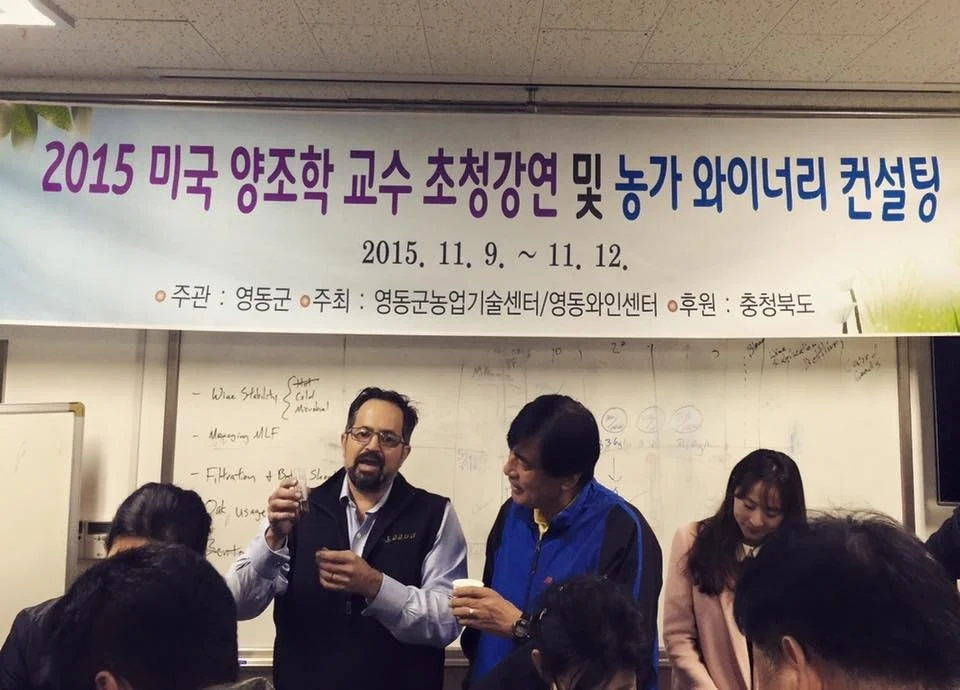
Across consulting engagements with wineries and beverage producers, I have been brought in to diagnose quality, microbiological, and process problems that required more than a laboratory answer. The work combined plant observation, root-cause analysis, production knowledge, sanitation practices, and collaboration with technical teams to identify practical solutions.
Winery Contamination & Facility Investigation
A boutique family-owned Oregon Pinot Noir producer was experiencing an aroma problem following a Brettanomyces contamination event. I conducted an onsite review of the wine, production practices, sanitation program, and facility systems to identify potential sources of recurring microbial risk.
A full inspection of the equipment and facilities identified a dirty fresh-air HVAC intake positioned near an apple tree where decomposing fruit accumulated on the ground, creating an avoidable source of insect and incoming microbial load. I recommended relocating the intake to a cleaner location, adding it to the sanitation schedule, and upgrading filtration to support cleaner positive-pressure airflow and reduce future contamination risk.
Beverage Refermentation & Process Control
A large national kombucha producer was experiencing refermentation in packaged product. Because the beverage contained fermentable sugars and nonsterile concentrates—and was intentionally produced with suspended solids—filtration was not a practical microbial-control option.
I evaluated the tunnel-pasteurization process and determined that although target temperatures were being reached, the product was not receiving sufficient thermal exposure at temperature to achieve the required microbial reduction.
Rather than immediately increasing temperature and potentially changing the product’s flavor profile, I recommended improving insulation at the tunnel entrance so the beverage began heating earlier and received greater effective hold time. A microbiologist subsequently validated the corrective action through plating across multiple production runs with no subsequent growth detected.
Capabilities demonstrated:
Microbiology & Contamination Control • Root-Cause Analysis • Plant Sanitation • Process Troubleshooting • Thermal Process Evaluation • Quality Systems • Corrective Action • Cross-Functional Technical Collaboration
Bridge.
#2 - From Teaching Winery to Workforce Engine
Napa Valley College | Viticulture & Winery Technology
Program development, operations and workforce education
The Situation
When I joined Napa Valley College, the wine program was transitioning from making wine in carboys and small tanks to operating the newly built Napa Valley Vintners Teaching Winery. The college had invested in the physical facility and was obtaining the winery license needed to produce and sell wine.
But having a bonded winery did not mean we yet had a functioning winery.
We lacked much of the equipment and infrastructure required to consistently produce commercially acceptable wine. There was no established marketing program, limited staffing, and little opportunity for students to participate in actual winery operations outside a single weekly Winery Operations class.
I was simultaneously a full-time instructor and the winery manager. With only one part-time winery employee, the operation could not depend on my physical presence every time work needed to be done.
The larger issue was educational credibility. In Napa Valley, simply teaching students about winemaking wasn't enough. If the program was going to prepare graduates for serious industry careers, students needed to learn how professional-quality wine was actually made, managed, packaged, presented, and sold.
The Challenge
The project required solving four interconnected problems:
Build production capability.
Acquire the equipment necessary to make stable, commercially credible wine.
Create operating continuity.
Develop enough staffing and structure for winery work to continue outside scheduled class hours.
Turn students into participants, not observers.
Connect coursework to meaningful production responsibilities and create opportunities for sustained hands-on experience.
Build a market-facing program.
Give students experience not only making wine, but presenting it professionally to consumers, employers, and the Napa Valley wine community.
What I Did
I started by addressing the missing production infrastructure.
Rather than relying entirely on college budgets, I worked directly with the wine community to assemble the equipment we needed. I negotiated a must-pump donation from Cardinale and worked with our career-technical education dean to secure grant funding for a manual bottling line so we could produce finished, shelf-stable wines.
The staffing problem required a different solution.
I worked with the Napa Valley College Foundation to establish an appropriate process for accepting industry support. When the college received a shipping-container-sized donation of biotechnology equipment, I hired a broker to monetize the equipment and help generate funding that could strengthen winery staffing.
We also turned instruction itself into a source of applied industry value. The Advanced Winemaking class conducted contract research for wine-industry oak and tannin suppliers, generating approximately $32,000 while giving students experience working on real commercial research questions.
Those resources helped strengthen the winery's operating capacity and develop a more substantial production role from what had originally been limited part-time support.
Connecting Education to Real Work
Equipment and staffing solved only part of the problem. Students still needed meaningful access to the winery.
I presented the case to college leadership for expanding student participation outside conventional class periods and began redesigning the instructional model around experiential learning.
I rewrote course activities so that actual winery responsibilities became part of students' coursework rather than something occurring separately from their education.
We then developed a work-experience structure through which students could work in the winery under the supervision and mentorship of production staff, earn college credit, and document legitimate industry experience on their résumés.
The result was a working learning environment integrating production, quality, safety, compliance, staffing, scheduling, facilities, equipment, and experiential education rather than treating those as separate activities. My résumé documents that the program ultimately trained more than 850 students in this environment.
From Production to Market
Once the production and quality systems were functioning and the first wines were ready for release, I focused on completing the learning cycle.
Students shouldn't simply make a product and walk away from it. They needed to understand how a finished agricultural product develops an identity, reaches a customer, and represents the institution that produced it.
I collaborated with the Art Department on wine-label design incorporating visual elements inspired by the winery's metal grape-leaf artwork.
We worked across disciplines again with welding and ceramics, including development of an amphora project associated with the Napa Valley Vintners wine auction, connecting wine production with art, craftsmanship, and community engagement.
I also created the Mayfair wine-release event as a venue where students could present their work, demonstrate their wine knowledge, interact with the community and industry, and make connections with potential employers.
The event helped transform the teaching winery from an internal instructional facility into a public platform for demonstrating student capability.
Results
The initiative grew into a functioning educational, production, and workforce-development operation:
850+ students trained through hands-on winery operations and instruction.
Established systems allowing student participation and winery operations to extend beyond scheduled classroom hours.
Secured industry donations, equipment, grant support, and revenue-producing projects to expand program capability.
Generated approximately $32,000 through applied industry research projects conducted with students.
Created employer-connected work-experience and internship opportunities.
Developed cross-disciplinary partnerships involving wine production, art, welding, ceramics, marketing, and hospitality.
Launched the Mayfair release event and redesigned the Estate Winery brand, contributing to a 300% increase in wine sales within three years.
Student-produced wines went on to earn commercial recognition, including a Best in Class Pinot Noir.
Graduates progressed into university wine programs and professional winemaking roles throughout the Napa Valley.
What It Demonstrates
Program Development | Operations Leadership | Workforce & Education Alignment | Resource Development | Experiential Learning | Stakeholder Engagement | Revenue Generation | Organizational Innovation
The project demonstrated that a facility alone does not create a program.
The teaching winery became valuable when the physical investment was connected to staffing, operating systems, curriculum, industry partnerships, student work experience, product quality, and a pathway into employment.
That meant turning a winery the college had built into an operation that students could actually learn in, work in, and use to launch careers.
Lead.
#1 - Building Trust in Pilot-Scale Innovation
E. & J. Gallo Winery | Research Winemaking & Pilot Operations
Operational excellence, applied research and scale-up
The Situation
I joined E. & J. Gallo Winery as an Assistant Research Winemaker and functional-area manager for the Research Winery in Modesto, the company’s central fermentation facility for product development, process development, and validation of vineyard research.
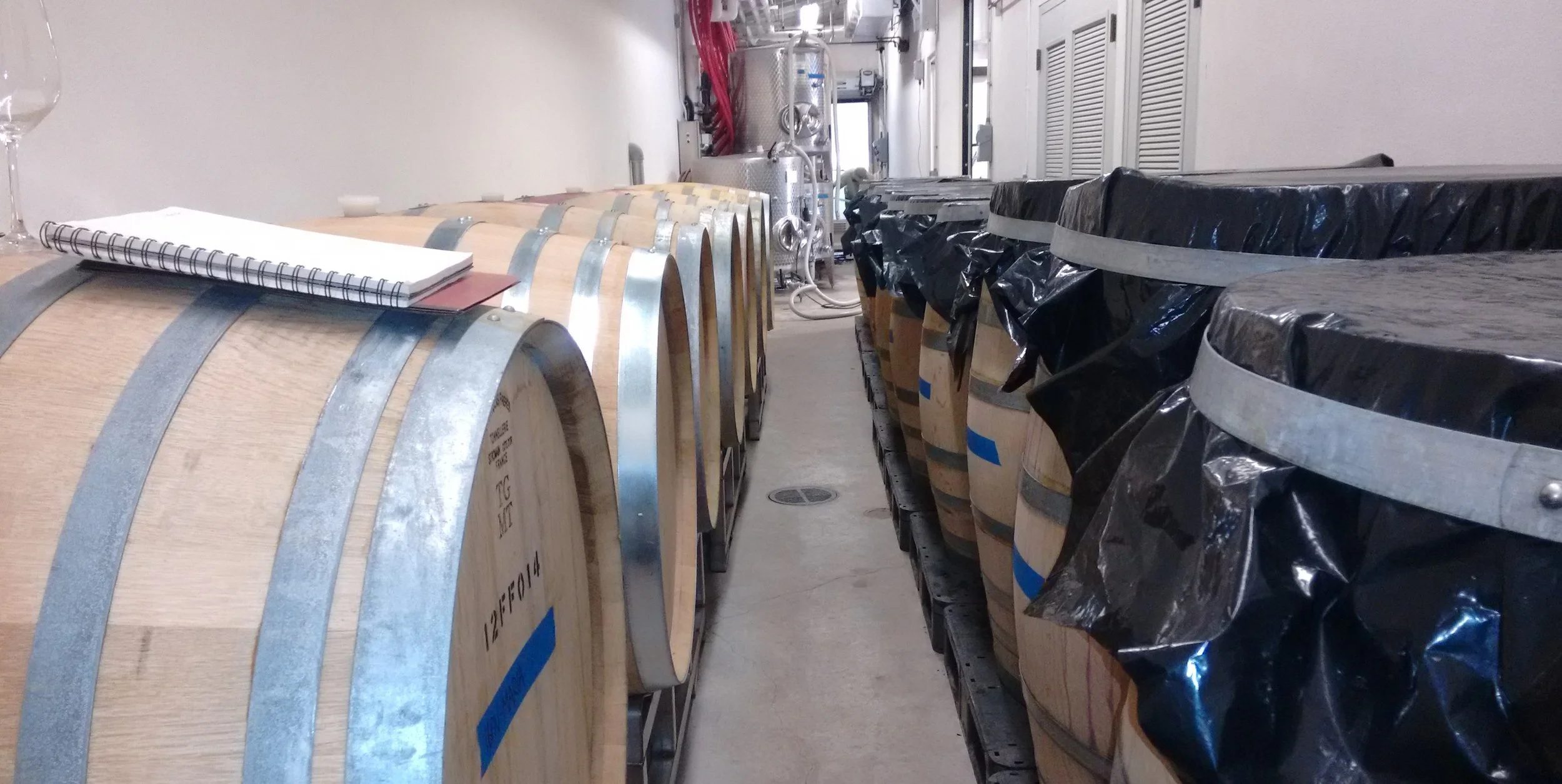
The facility used highly controlled, scaled-down stainless-steel fermenters with glycol cooling. Every experimental lot required rigorous juice, fermentation, and finished-wine analyses, often supplemented by specialized chemical or microbiological testing. Records and sample integrity had to be meticulous because an error could invalidate not only the fermentation trial, but months of upstream research.
The challenge was that the operation was generating valuable research without consistently producing results the broader organization could trust or readily scale.
The Challenge
Three problems were limiting the effectiveness of the research program.
Capacity and fatigue. Harvest workloads and unplanned “walk-on” trials created extreme overtime. With a corporate hiring freeze in place, adding staff required a financial case rather than simply requesting another employee.
Experimental integrity. Research wines were not sterile filtered before storage. Some refermented before spring sensory evaluation, invalidating roughly 20% of completed trial work.
Scale-up confidence. Even successful 10-gallon experiments faced skepticism from commercial winemakers responsible for fermenters ranging from roughly 50,000 to 600,000 gallons. The organization needed an intermediate scale where promising ideas could be tested without putting full-scale production at risk.
All of this occurred while the department underwent five reorganizations in three years.
What I Did
I approached the problems as connected issues of capacity, quality, workflow, and scale.
To address staffing, I worked with payroll to analyze three years of harvest overtime. The data showed that overtime expenditures could support an additional seasonal employee. I presented the business case to management, secured approval despite the hiring freeze, and the following harvest eliminated overtime.
I also analyzed the amount of time required for daily fermentation measurements. During peak production, testing could consume much of the morning. That analysis supported investment in an Anton Paar analyzer, cutting the time required for routine fermentation analysis by nearly half.
To protect experimental integrity, I estimated the labor and research value being lost to spoiled trials and used that analysis to justify investment in a sterile cartridge filtration system. By coordinating with Engineering and making use of available internal labor, we installed the system, implemented integrity testing, and eliminated the recurring spoilage problem.
The remaining challenge was scale.
I proposed creating a true pilot winery that could bridge tightly controlled research fermentations and commercial production. Drawing on fermentation science and engineering training from UC Davis, I presented the concept to the Chief Technical Officer and departmental vice presidents, making the case that an intermediate-scale facility could reduce the cost and risk of innovation while improving product development and commercialization.
The proposal was approved.
From Concept to Operating Facility
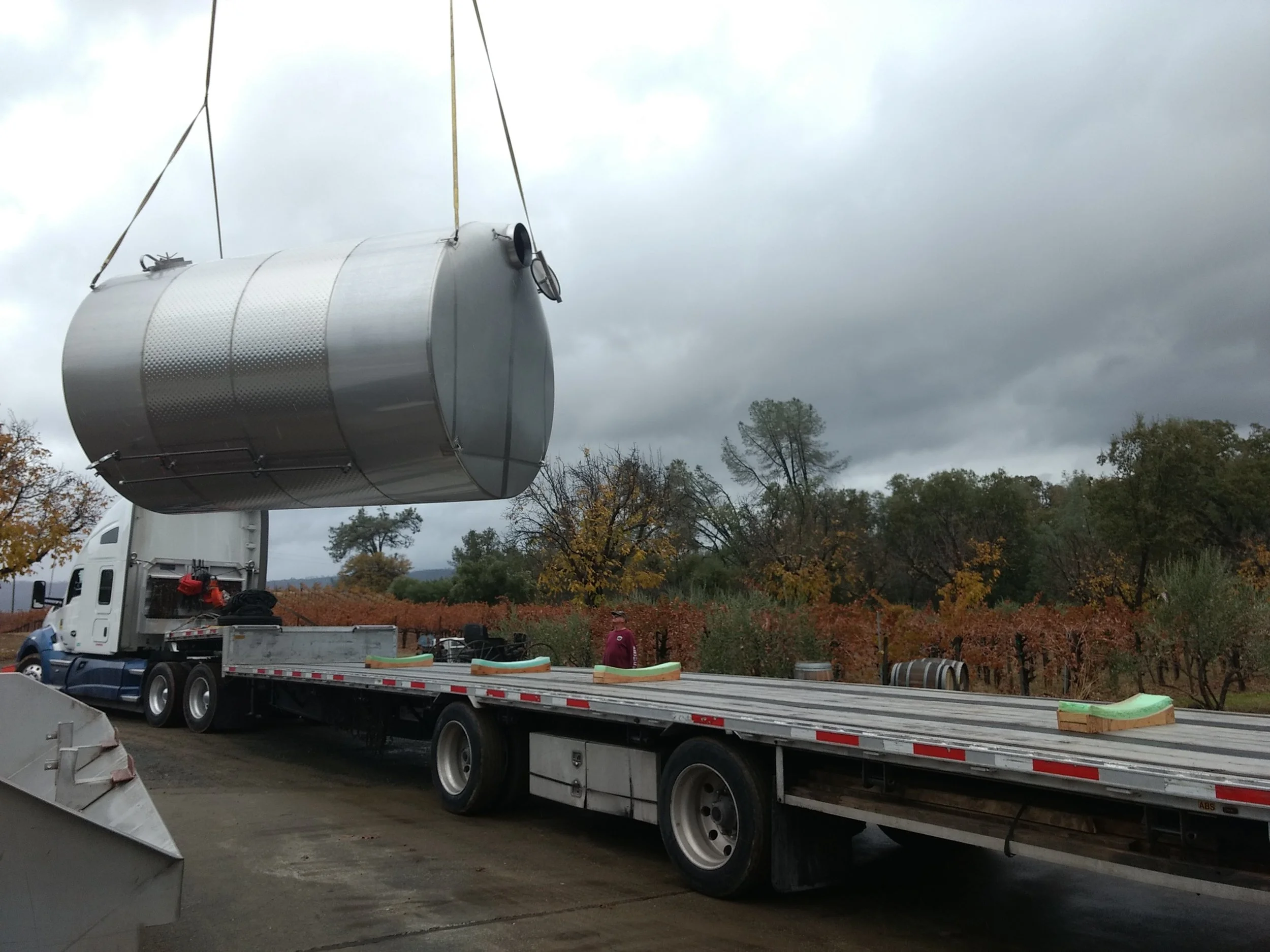
Corporate Engineering assigned a project manager, and I co-led the technical design and operational planning for what became the Livingston Pilot Winery.
When the original approximately $2.5 million concept was reduced to a $530,000 project, we simplified the design while protecting its core research and scale-up purpose.
At the same time the facility was being designed and constructed, I mapped the future production and data flows, developed staffing requirements, coordinated with HR, and prepared the operating model so the facility could function once commissioned.
The winery was completed on schedule and approximately 3% under budget.
During its first harvest, my team processed approximately 180 tons of grapes without an injury.
Results
The work transformed the research operation from a small experimental winery into a more reliable pilot-development system:
Eliminated harvest overtime after making the financial case for additional staffing.
Reduced routine fermentation-analysis time by nearly half through analytical automation.
Eliminated recurring research-wine spoilage through sterile filtration and integrity testing.
Expanded pilot operations staffing from 3 to 12 employees across four facilities.
Supported more than 1,200 experimental wine lots across product and process-development programs.
Built and launched a $530,000 pilot winery approximately 3% under budget.
Eliminated overtime while increasing production capacity by approximately 30%.
What It Demonstrates
Applied Research & Innovation | Operational Excellence | Facility Startup | Process Improvement | Quality Systems | Data-Informed Decision-Making | Cross-Functional Leadership
The central lesson wasn't simply that we built another winery. It was that innovation becomes valuable when the organization can trust the process that produces it.
By improving staffing, analytical workflow, experimental integrity, and scale-up capability together, we created a stronger bridge between research and commercial production.