
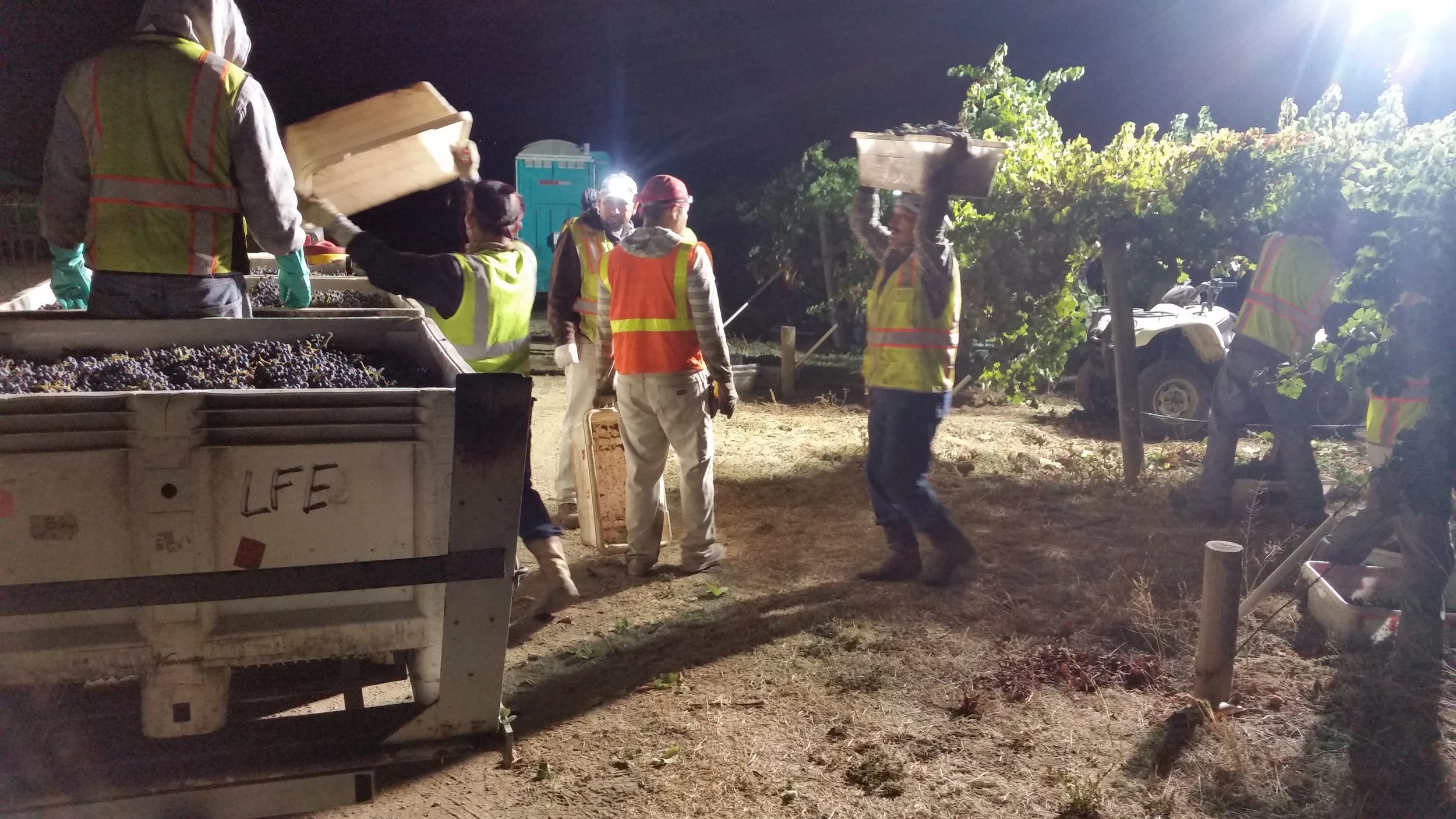
Destination Agriculture
A workforce model built for the realities of agricultural businesses.
Destination Agriculture helps farms and value-added agricultural businesses develop versatile employees who can contribute across the full value chain, from production and stewardship to processing, quality, and product sales.
For those that grow, make and sell products with a sense of place.

Why Destination Agriculture?
Destination Agriculture is an apprenticeship career pathway built around the full agricultural value chain.
Agricultural businesses increasingly need employees who can contribute across more than one function. Seasonal labor constraints, small teams, changing markets, and the growing complexity of production, processing, quality, and customer engagement make narrowly trained workers harder to sustain.
Destination Agriculture is designed to help employers build cross-trained employees who understand how the different parts of an agricultural business connect.
Grow
Employees understand production, stewardship, soil health, water, crops, livestock, and day-to-day agricultural operations.
Make
Employees build practical skills in processing, sanitation, quality, safety, packaging, and value-added production.
Sell
Employees understand the product, communicate its value, support direct sales and product demonstration, and help connect customers to the story of how and where it was produced.
The goal is not to turn every employee into an expert in everything. It is to create versatile workers who understand the whole business and can contribute where they are needed most.
What Does My Business Gain?
More Versatile Employees
Develop workers who understand multiple parts of the operation and can contribute across production, processing, quality, stewardship, and customer-facing activities.
Stronger Retention and Career Progression
Give employees a clearer pathway to build skills, take on greater responsibility, and see a future within the business.
Training Built Around Real Operations
Use the work already happening in your business as the foundation for structured employee development rather than relying only on outside classroom training.
A Recognized Workforce Pathway
Participating employers can help shape a registered apprenticeship framework designed specifically for diversified agricultural businesses.
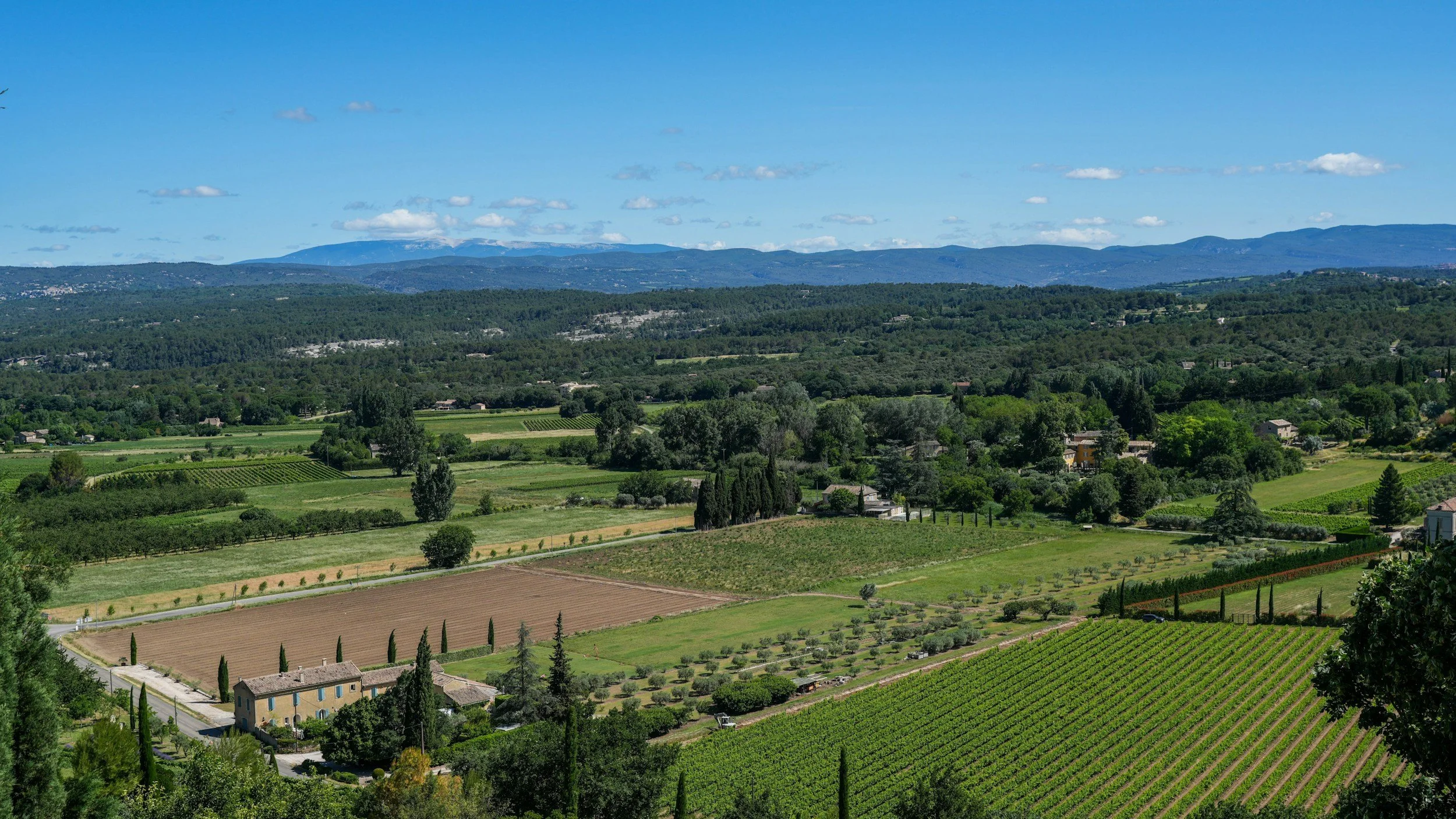
For small and medium-sized agricultural businesses, the value is flexibility: developing employees who understand the whole operation and can grow with the business over time.
From Career Exploration to Skilled Employment
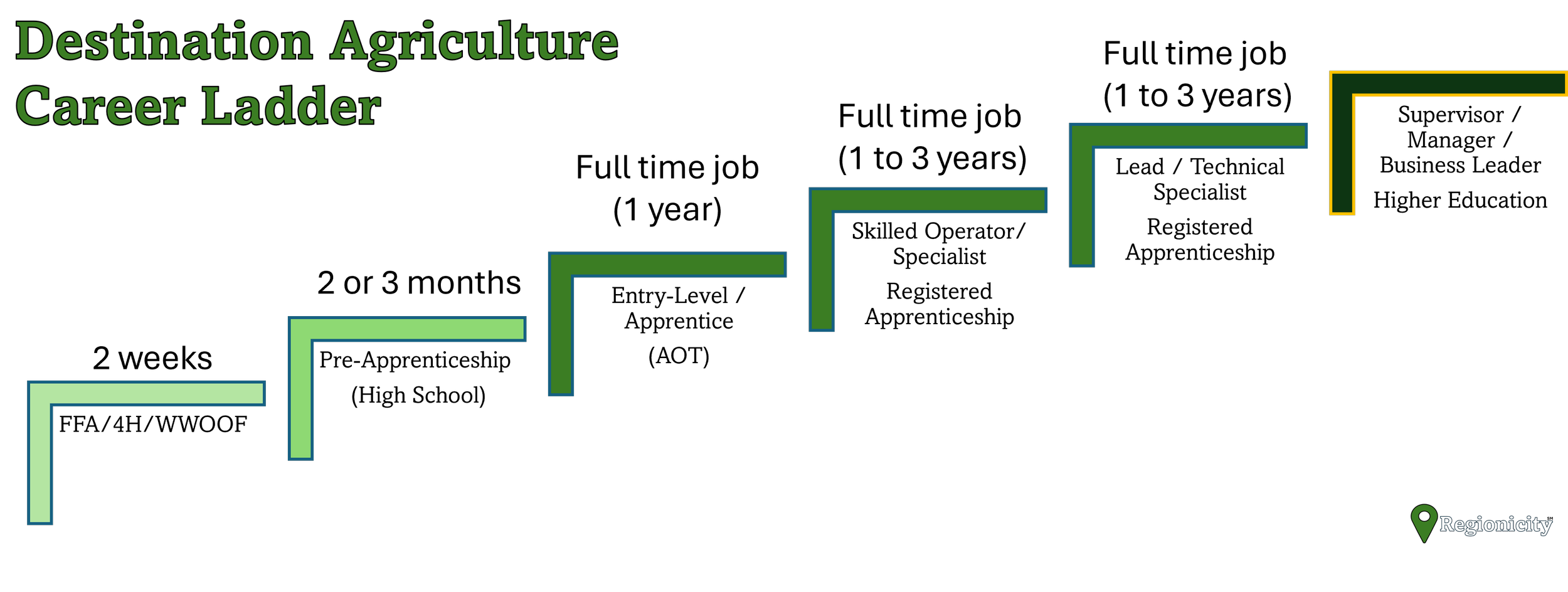
AOT is designed as a foundation, not an endpoint. Employees begin by developing broad experience across the agricultural business, then deepen their skills as they move into more specialized, technical, supervisory, or management roles.
1. Entry-Level / Apprentice
Build foundational experience across relevant Grow → Make → Sell activities while learning how the entire operation connects.
2. Skilled Operator / Specialist
Develop deeper expertise in areas such as crop or livestock production, aquaculture, processing, quality, equipment, stewardship, sales, or other business functions.
3. Lead / Technical Specialist
Take responsibility for systems, processes, teams, quality, technical operations, production areas, or specialized business functions.
4. Supervisor / Manager / Business Leader
Progress into operational leadership, production management, business management, entrepreneurship, or other advanced roles within agriculture and value-added production.
The objective is broad exposure first, followed by specialization and increasing responsibility as the employee’s interests, capabilities, and the needs of the business become clearer.
Exposure/Soft Skills Development → Broad Foundation → Specialization → Leadership
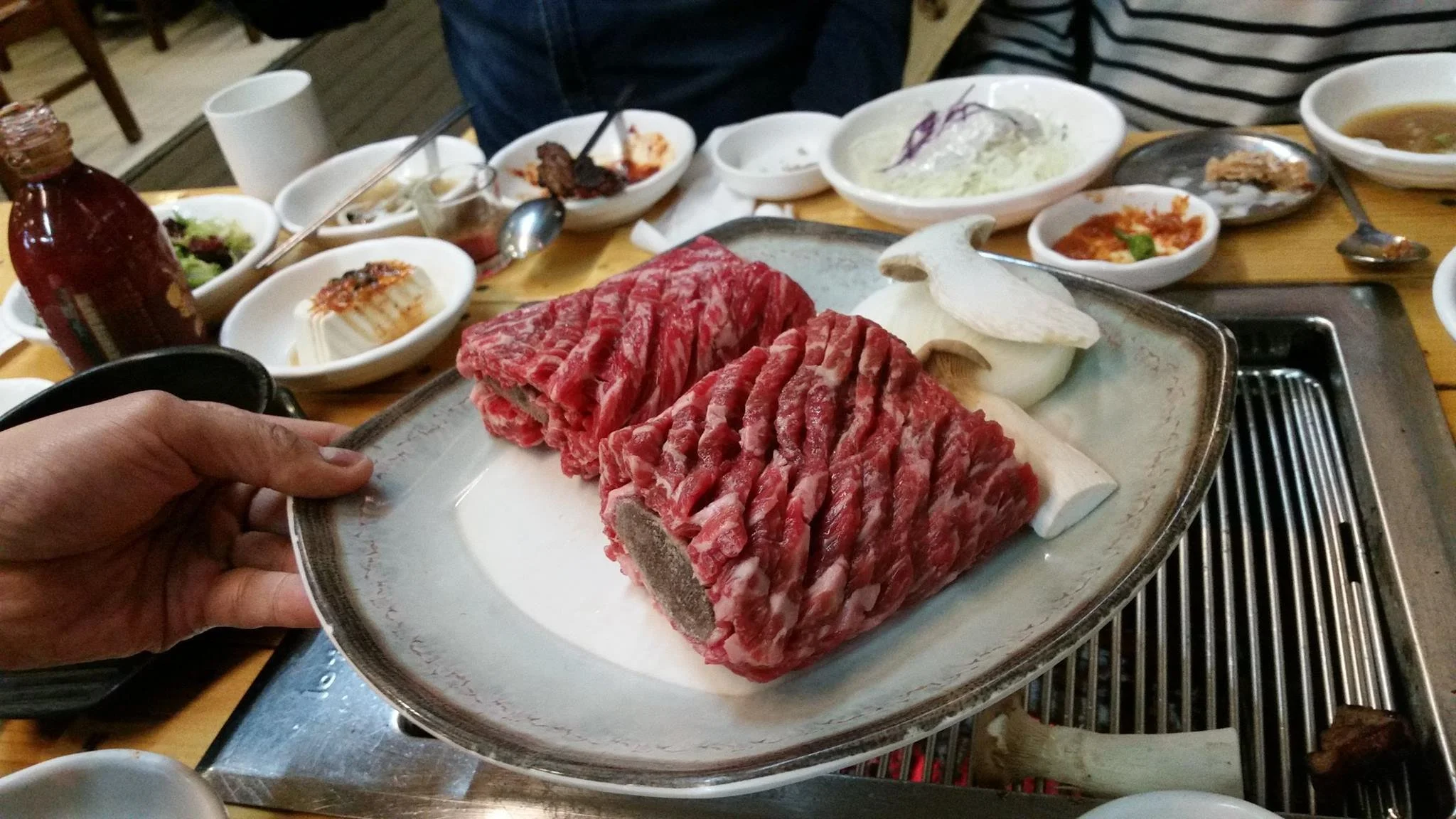
What Support Would Employers Receive?
Apprenticeship Guidance
Support with understanding program requirements, employer responsibilities, training expectations, and the steps needed to participate.
Training Structure & Tools
A defined occupational framework, work-process guidance, and tools for organizing and documenting apprentice skill development.
Related Instruction Connections
Coordination with education and training partners that can help provide the required technical instruction.
Workforce & Partner Connections
Access to workforce, education, industry, and regional partners that may help with recruitment, training resources, funding opportunities, and program implementation.
The intent is for employers to focus on developing a capable employee while the broader apprenticeship system helps support the structure around that training relationship.
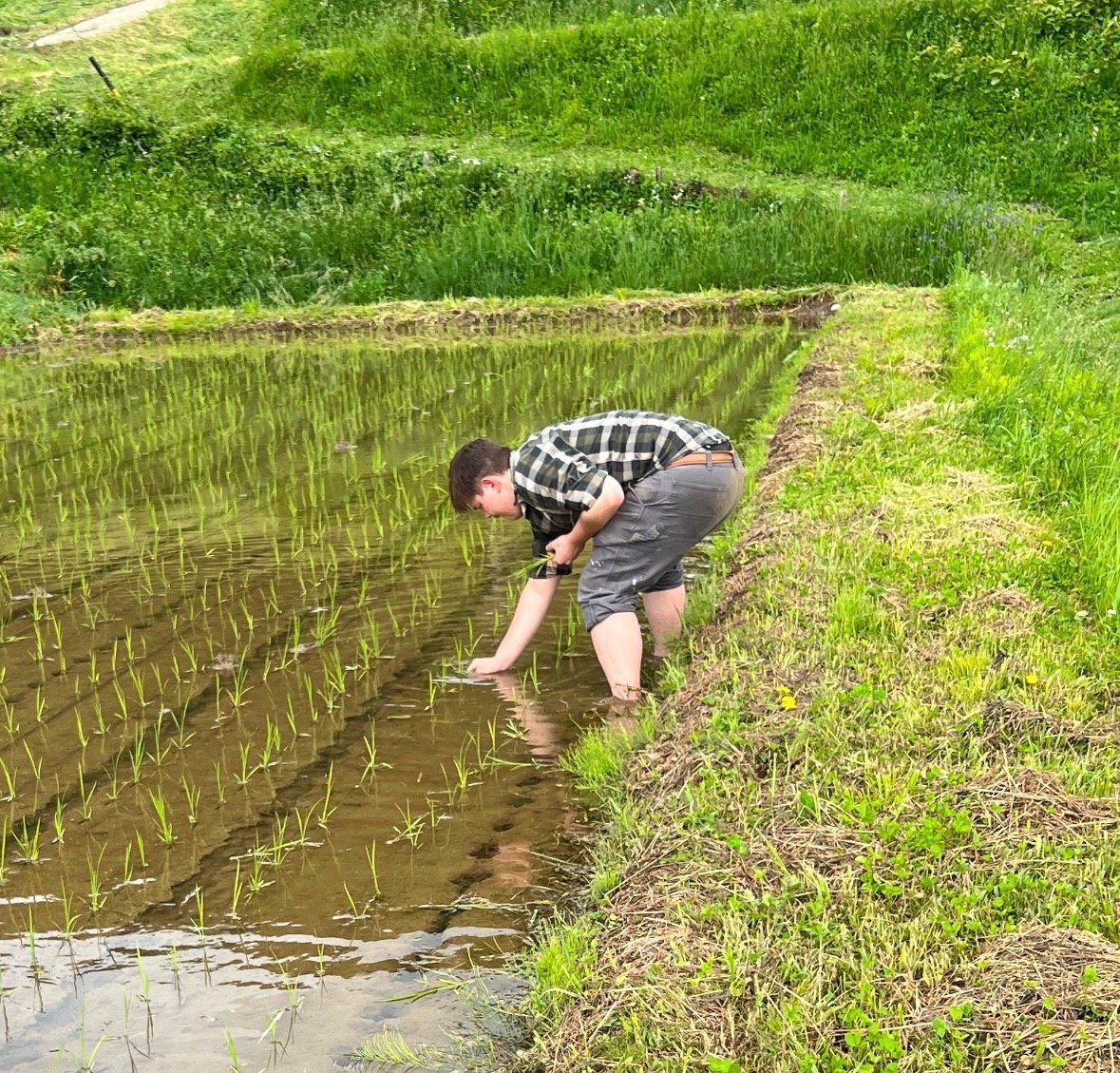
The employer remains the training environment.
Destination Agriculture provides the structure that connects the work, the learning, and the employee’s progression.
How It Works for Employers
Destination Agriculture is designed to build training around real agricultural jobs—not require employers to redesign their businesses around a classroom program.
1. Start With the Work You Already Do
Identify the production, processing, quality, stewardship, and sales activities that are relevant to your operation.
2. Build a Cross-Trained Employee
Employees develop experience across the parts of Grow → Make → Sell that fit the business, while building a broader understanding of how the operation works as a whole.
3. Combine Work With Structured Learning
On-the-job experience is reinforced by related instruction in the technical knowledge employees need to perform safely, effectively, and with greater independence.
4. Create a Recognized Career Pathway
Through the proposed Agroecology Operations Technician registered apprenticeship, employers could use this framework to develop new hires or existing employees through a structured, recognized training pathway.
The Agroecology Operations Technician Apprenticeship
The Agroecology Operations Technician (AOT) is the proposed registered apprenticeship being developed to implement the Destination Agriculture workforce model.
AOT gives agricultural employers a structured way to develop cross-trained employees through one full growing season and calendar year—combining supervised work experience with related technical instruction.
2,000 Hours of On-the-Job Learning
Apprentices develop practical skills through the employer’s real operations across relevant areas of Grow → Make → Sell.
144 Hours of Related Instruction
Technical instruction reinforces the knowledge employees need in areas such as agricultural systems, processing, safety, quality, stewardship, and business operations.
Built Around the Employer
The framework is designed to accommodate different agricultural commodities and business models rather than requiring every employer to train workers in exactly the same way.
AOT is intended for diversified agricultural businesses of many kinds—including crop, livestock, dairy, food, beverage, and other value-added operations. Employers would train apprentices using the activities that actually occur within their businesses while meeting the overall occupational competencies.

What Would Participation Require?
Employers would not be expected to create a new training operation from scratch. Destination Agriculture is designed to organize the work, supervision, and learning that already happen inside an agricultural business into a structured employee-development pathway.
Provide Meaningful Work Experience
Give the apprentice supervised opportunities to develop skills through the production, processing, stewardship, quality, and sales activities that are relevant to your operation.
Provide a Qualified Mentor or Supervisor
Identify an experienced employee who can oversee training, provide feedback, and verify skill development.
Support Related Instruction
Allow the apprentice to complete the required technical instruction that complements their on-the-job learning.
Track Progress
Work with the apprenticeship sponsor or intermediary to document training hours, competencies, and apprentice progress.

The goal is to make participation practical for agricultural employers—especially smaller businesses that already train employees on the job but may not have a formal training system.
Who Is Destination Agriculture For?
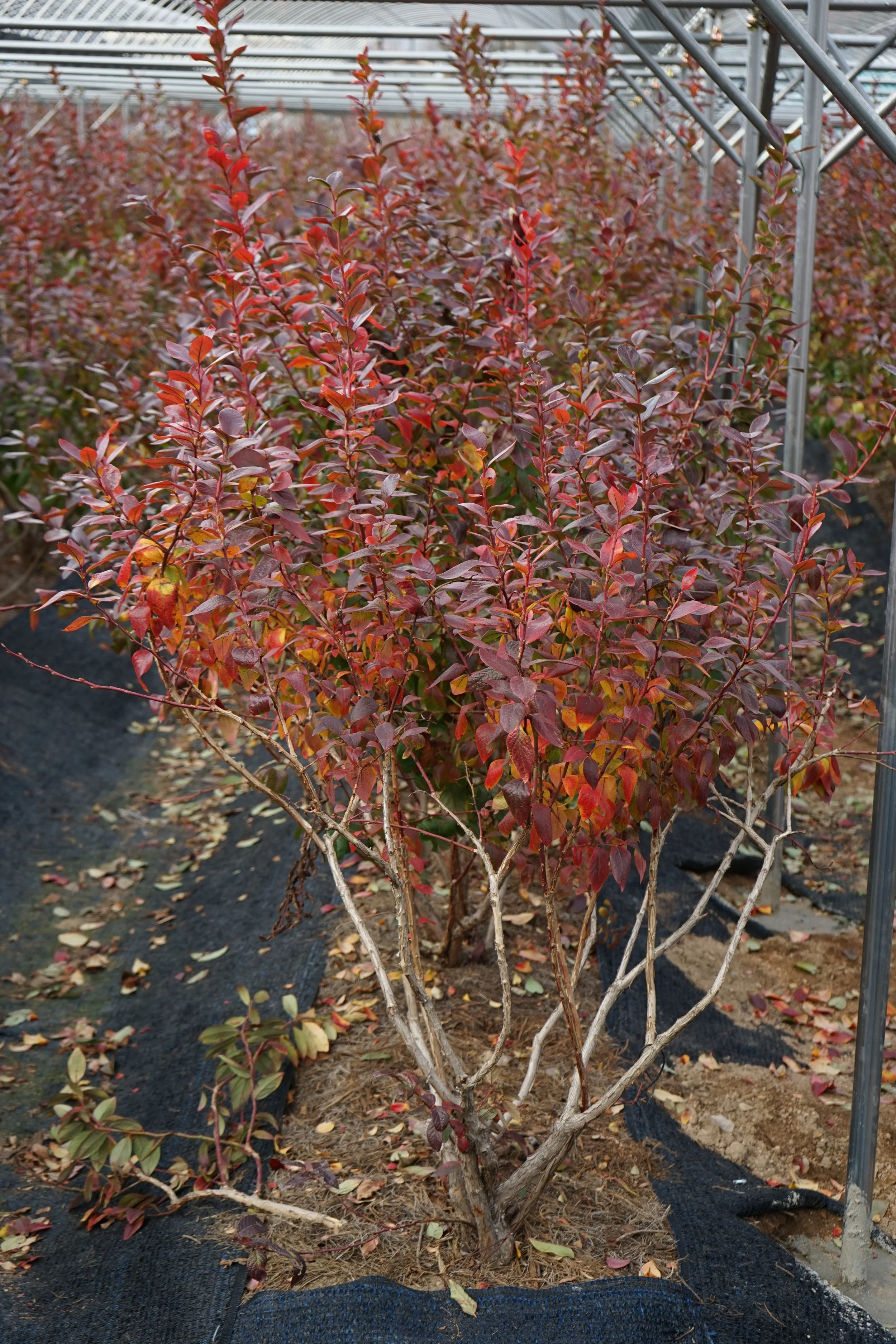
Destination Agriculture is designed for small and mid-sized agricultural businesses that benefit from employees who can understand multiple parts of the operation and take on greater responsibility over time.
The model is intentionally flexible across crops, livestock, aquaculture, and value-added agricultural production.
Farms, Ranches & Aquaculture Operations
Crop farms, livestock operations, dairies, vineyards, orchards, mixed-production farms, greenhouse and nursery operations, fisheries, shellfish and seaweed producers, and other land- or water-based agricultural businesses.
Food & Beverage Producers
Wineries, creameries, meat and seafood processors, specialty food manufacturers, beverage producers, and other businesses that transform agricultural products into value-added goods.
Direct-to-Consumer Agricultural Businesses
Agricultural businesses that combine production or processing with farm stands, tasting rooms, farmers markets, memberships, product education, demonstrations, or other direct-sales activities.
Diversified Small & Mid-Sized Agricultural Businesses
Operations where employees already wear multiple hats and may move between production, processing, quality, stewardship, packaging, sales, and other responsibilities as business and seasonal needs change.
Destination Agriculture is especially relevant where cross-training already happens informally. The goal is to turn that experience into a more intentional, structured pathway for developing skilled and versatile employees.
Employer Questions
-
No. The framework is intended to accommodate different agricultural businesses and commodities. Employers train apprentices through the activities that genuinely occur within their operation while meeting the overall occupational requirements.
-
No. AOT is designed for agricultural employers across production systems. Agroecology provides the systems-based foundation—connecting soil, water, biodiversity, production, processing, resource efficiency, and business performance—rather than requiring a particular certification or farming label.
-
Yes. Registered apprenticeship can be used to develop eligible existing employees as well as new hires, provided program requirements are met.
-
The proposed AOT pathway is structured around approximately 2,000 hours of on-the-job learning and 144 hours of related instruction, designed to span one full growing season and calendar year.
-
Not yet. The occupational framework is currently being advanced through the registered apprenticeship development and approval process with support from employers, industry organizations, education partners, and other stakeholders.
-
No. Employers can review the framework, provide industry feedback, endorse the occupation, or participate in the coalition without immediately committing to employ an apprentice.
Could Destination Agriculture Work for Your Business?
Start with a short conversation about your operation, workforce needs, and how the proposed AOT apprenticeship could fit.
Destination Agriculture is being developed around the needs of real agricultural employers. Whether you operate a farm, ranch, aquaculture business, winery, creamery, food or beverage company, or another value-added agricultural operation, the first step is simply determining whether the model makes sense for your workforce.
FOR AGRICULTURAL EMPLOYERS
Want to review the apprenticeship first?
About Destination Agriculture
Destination Agriculture is being developed by Regionicity as an employer-centered agricultural workforce framework connecting production, value-added processing, and market-facing skills through Grow → Make → Sell.